
FLD-01
Field Operations
Mission orchestration across distributed robotic fleets, designed to bring telemetry, command dispatch, and outcome recording into one operational spine.
IN DEVELOPMENTRobots / Drones / Fleets / Telemetry / Command / Records
// Boot complete // Runtime nominal
A real-world validation layer, in development, for taking physical AI from simulation into production.
Designed around instrumented fleets and controlled hazard environments, with a chain-of-custody record from capture to deployment.
Real-world intelligence
Built for what's next
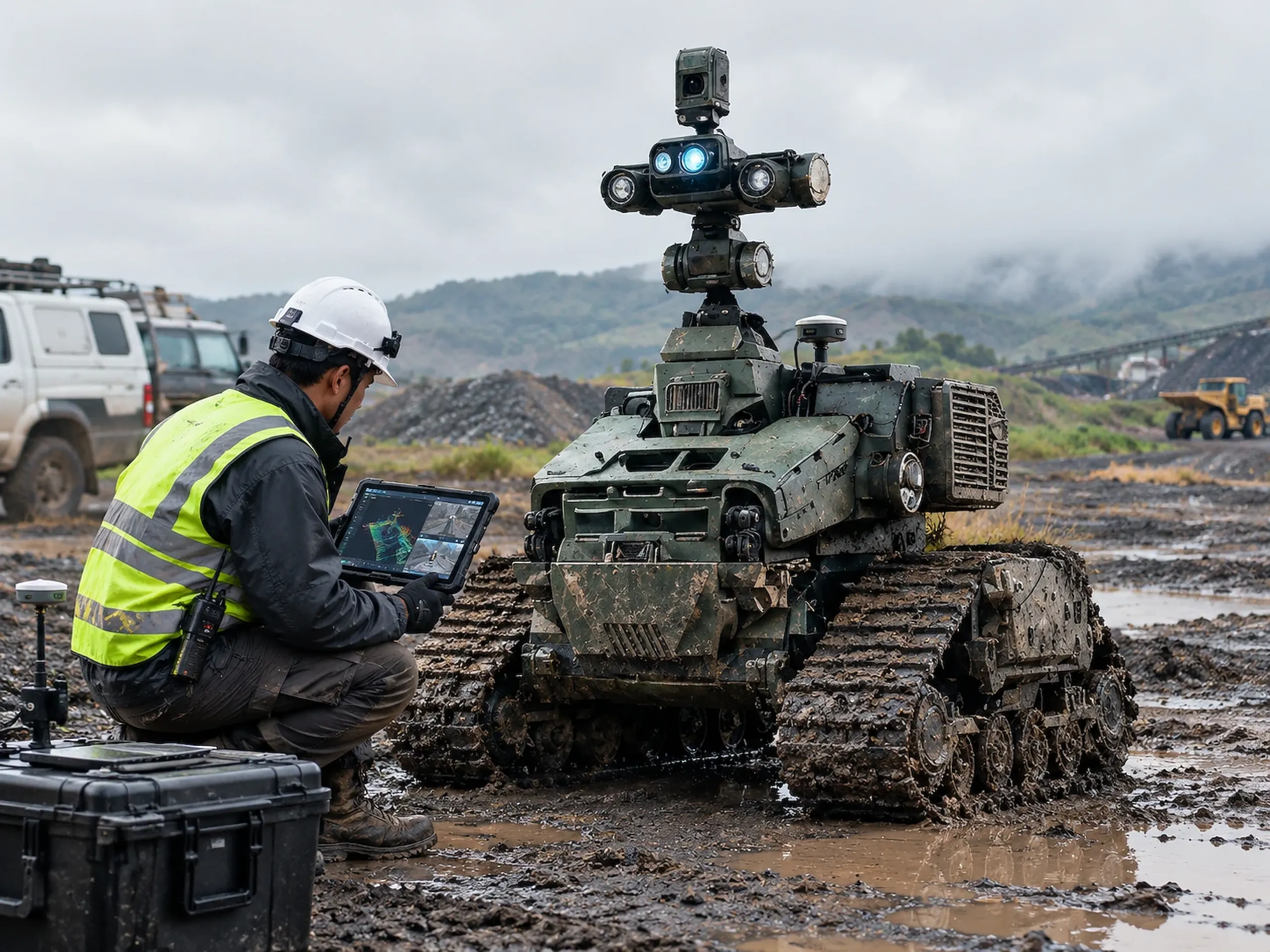
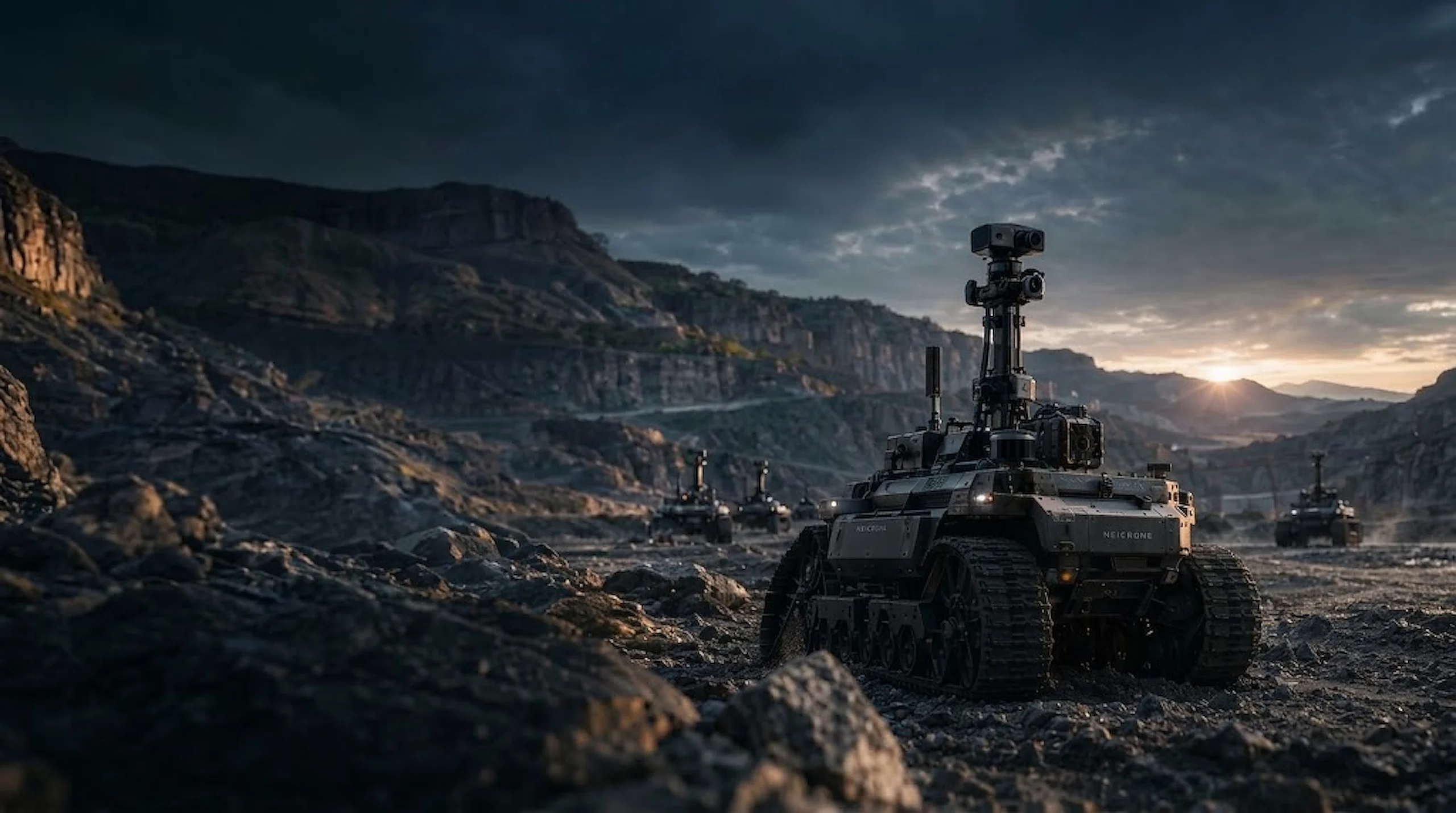
A tracked field unit in non-linear terrain: the kind of conditions Substrate is built to capture.
Capability is outpacing deployment. The constraint has moved downstream, into physical evidence.
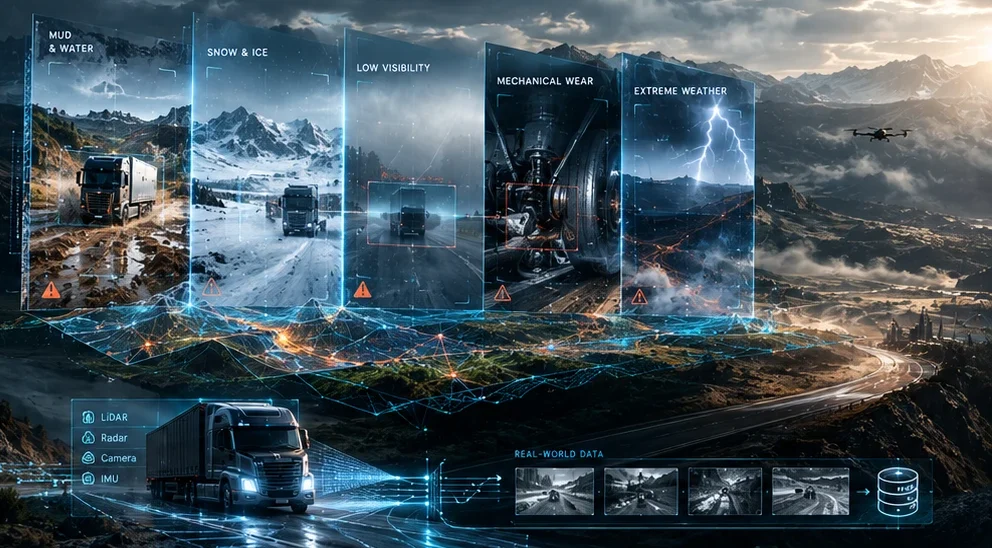
Vision-Language-Action (VLA) models are advancing fast, but hardware deployments fail because real-world physical data is scarce, expensive, and dangerous to harvest in public spaces. Simulations cannot capture non-linear edge conditions like mud, sudden weather shifts, or mechanical wear.
Non-linear surface conditions
Mud, standing water, ice transitions
Sudden weather shift
Inside a single trajectory window
Mechanical wear drift
Across actuator duty cycles
Public-space harvesting
Legally constrained, expensive, unsafe
A real-world validation layer being built on instrumented commercial fleets and controlled hazard environments, designed to give physical AI the evidence it needs to move from simulation into production.
Neicrone Substrate is not six separate products. It is designed as one real-world validation system, built in stages.

Mission orchestration across distributed robotic fleets, designed to bring telemetry, command dispatch, and outcome recording into one operational spine.
IN DEVELOPMENTRobots / Drones / Fleets / Telemetry / Command / Records
Controlled hazard environments (rain, mud, debris, thermal extremes, mechanical wear). Built to reproduce edge cases before production deployment.
PLANNEDRain / Mud / Debris / Thermal / Wear / Edge cases
Class 8 trucks and autonomous logistics platforms as distributed sensor arrays, intended to supply real-world validation data from long-haul routes.
PLANNEDTrucks / Autonomous / Routes / Telemetry / Validation data
Compressed inference at point of capture. LiDAR, radar, vision, IMU. Streams designed to respect bandwidth limits and keep a chain-of-custody record.
NEXTLiDAR / Radar / Vision / IMU / Compression / Chain of custody
Hardware-in-the-loop validation gates, where models are to be tested against real actuators, latency, and failure modes before fleet deployment.
PLANNEDModels / Actuators / Latency / Failure modes / Safety gates
Production fleets running under Substrate instrumentation, with evidence from operations feeding back into model retraining.
LONG-TERMFleets / Operations / Retraining / Continuous improvement
 01 / 06
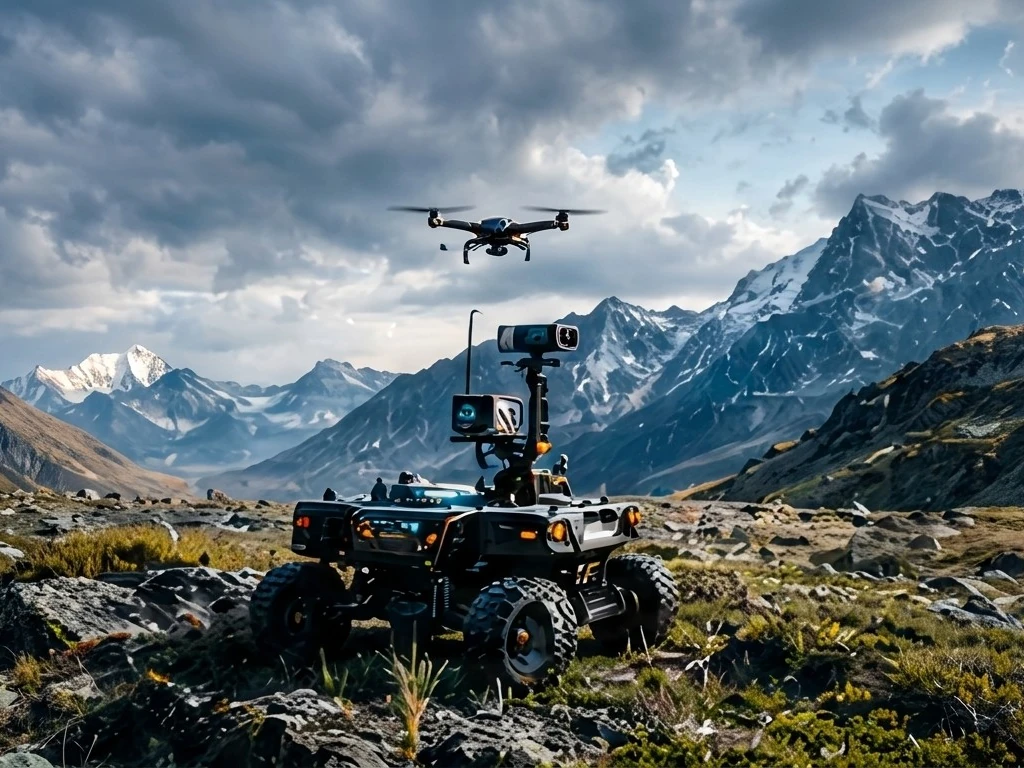
Mission orchestration across distributed robotic fleets, designed to bring telemetry, command dispatch, and outcome recording into one operational spine.
IN DEVELOPMENTRobots / Drones / Fleets / Telemetry / Command / Records
 02 / 06
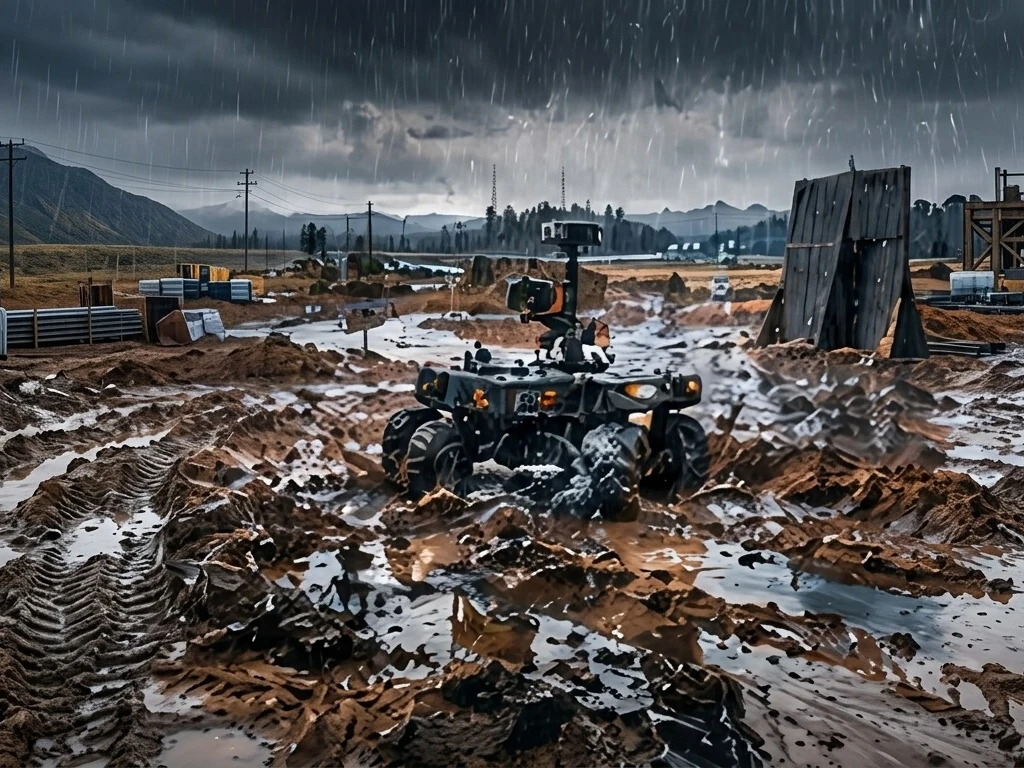
Controlled hazard environments (rain, mud, debris, thermal extremes, mechanical wear). Built to reproduce edge cases before production deployment.
PLANNEDRain / Mud / Debris / Thermal / Wear / Edge cases
 03 / 06
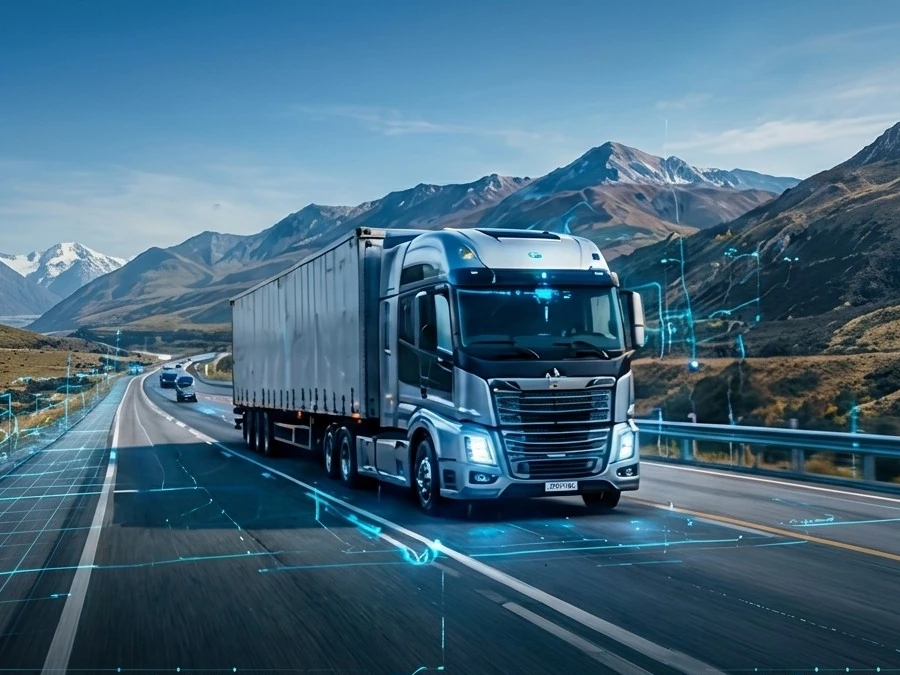
Class 8 trucks and autonomous logistics platforms as distributed sensor arrays, intended to supply real-world validation data from long-haul routes.
PLANNEDTrucks / Autonomous / Routes / Telemetry / Validation data
 04 / 06
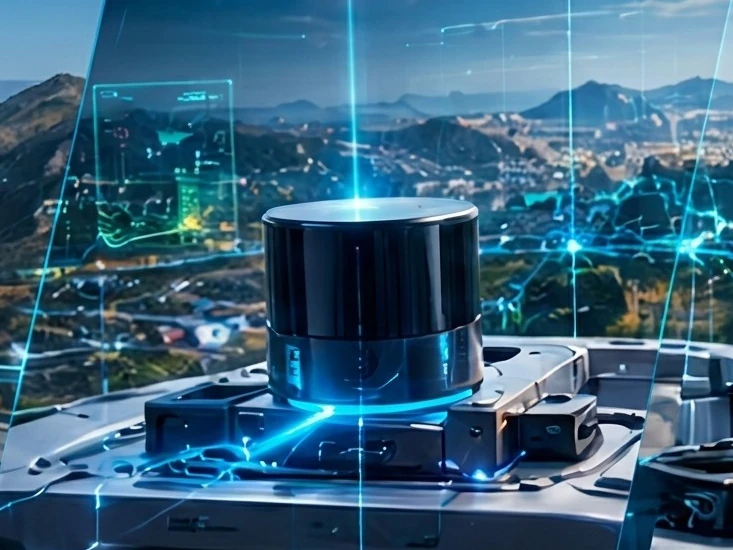
Compressed inference at point of capture. LiDAR, radar, vision, IMU. Streams designed to respect bandwidth limits and keep a chain-of-custody record.
NEXTLiDAR / Radar / Vision / IMU / Compression / Chain of custody
 05 / 06
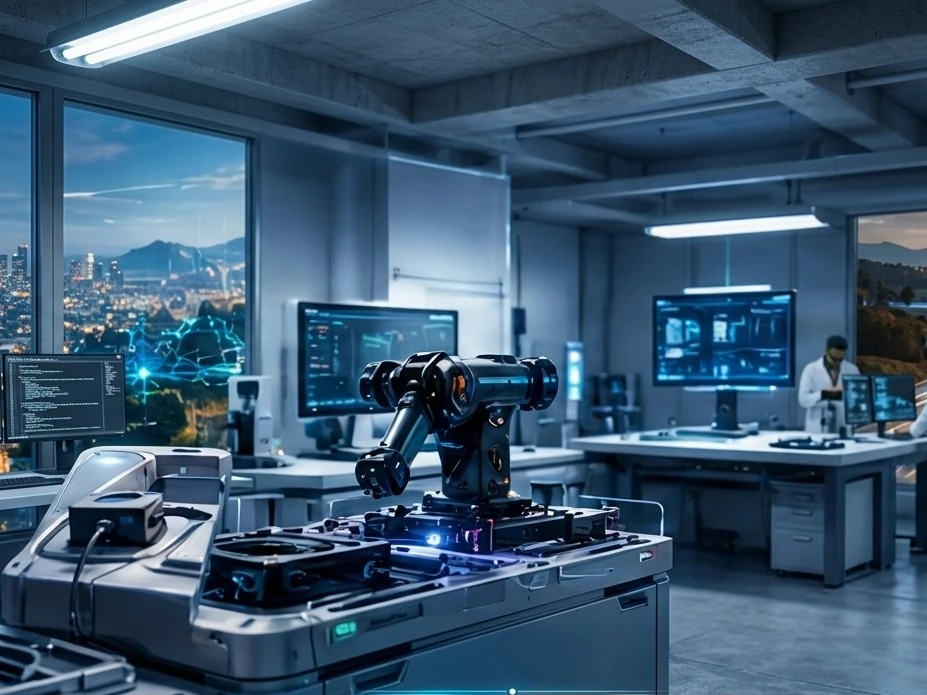
Hardware-in-the-loop validation gates, where models are to be tested against real actuators, latency, and failure modes before fleet deployment.
PLANNEDModels / Actuators / Latency / Failure modes / Safety gates
 06 / 06
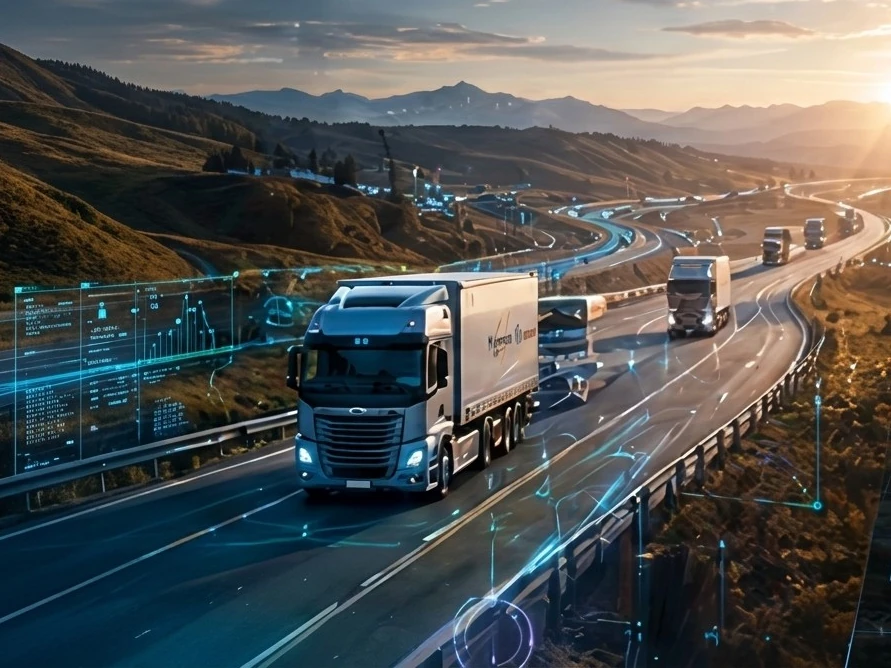
Production fleets running under Substrate instrumentation, with evidence from operations feeding back into model retraining.
LONG-TERMFleets / Operations / Retraining / Continuous improvement
Swipe · 06 layers
From capture through validation to deployment, the substrate is the continuous thread.
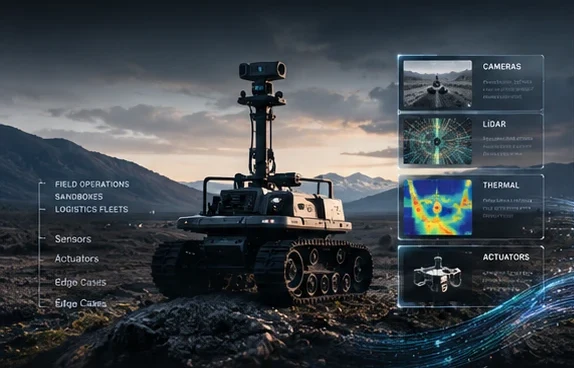
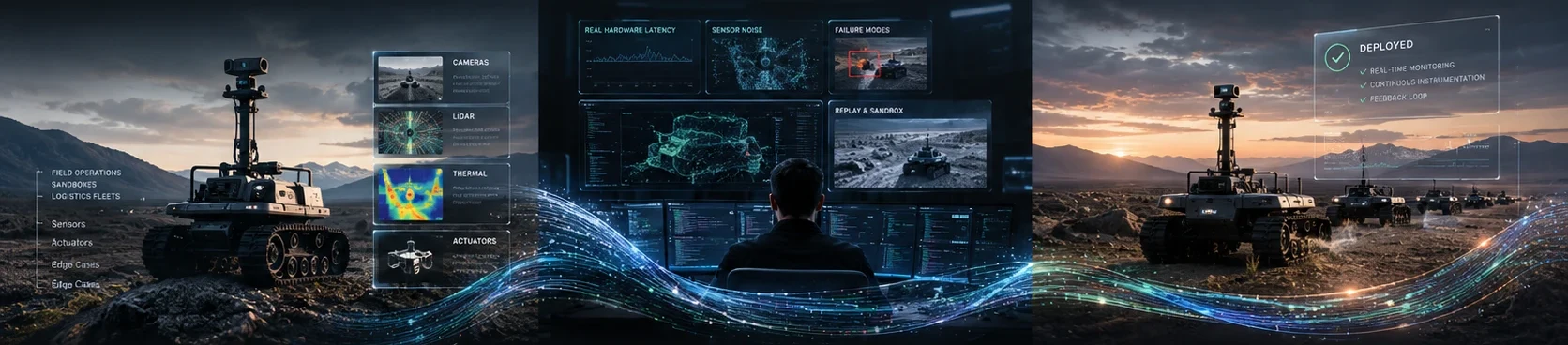
Field operations, sandboxes, and logistics fleets generate raw evidence: sensor streams, actuator commands, outcomes, edge cases. Andromeda selects which substrate matters, sensor pipelines compress and prioritize, and every record is designed to carry its chain of custody.
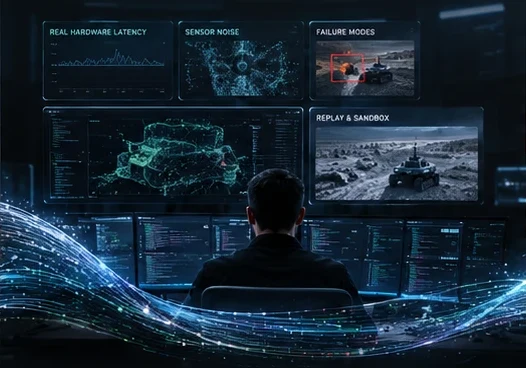
Models are tested against real hardware latency, real sensor noise, and real failure modes. Edge cases found in the field are replayed in sandboxes. The model either passes, or the substrate shows why it should not.
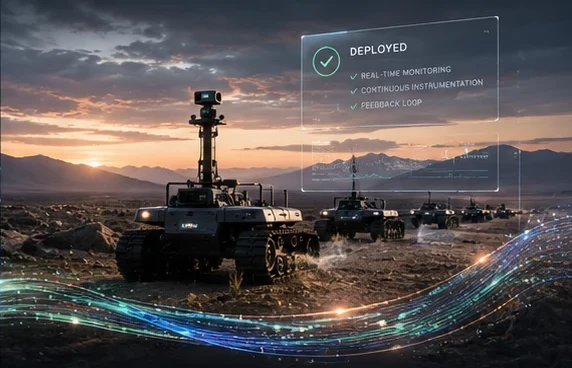
Production fleets are designed to run under continuous Substrate instrumentation. New edge cases and failure modes feed back into retraining and sandbox scenario generation, so the loop keeps closing.
Intelligent machines can only become reliable when they can continuously learn from the environments in which they operate.
But physical-world data is fragmented across sensors, machines, simulations and operational systems.
Neicrone is building the infrastructure to connect them.
From realityto intelligenceto safer deployment
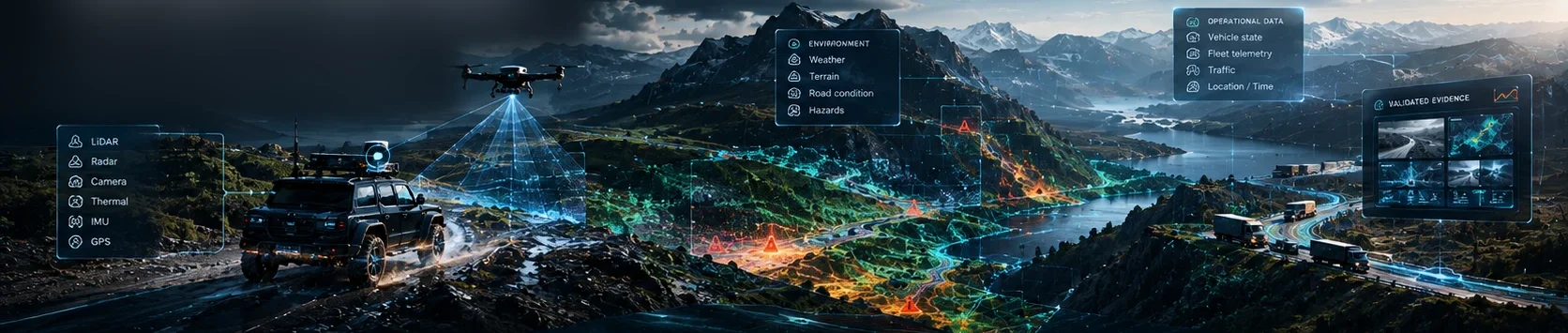
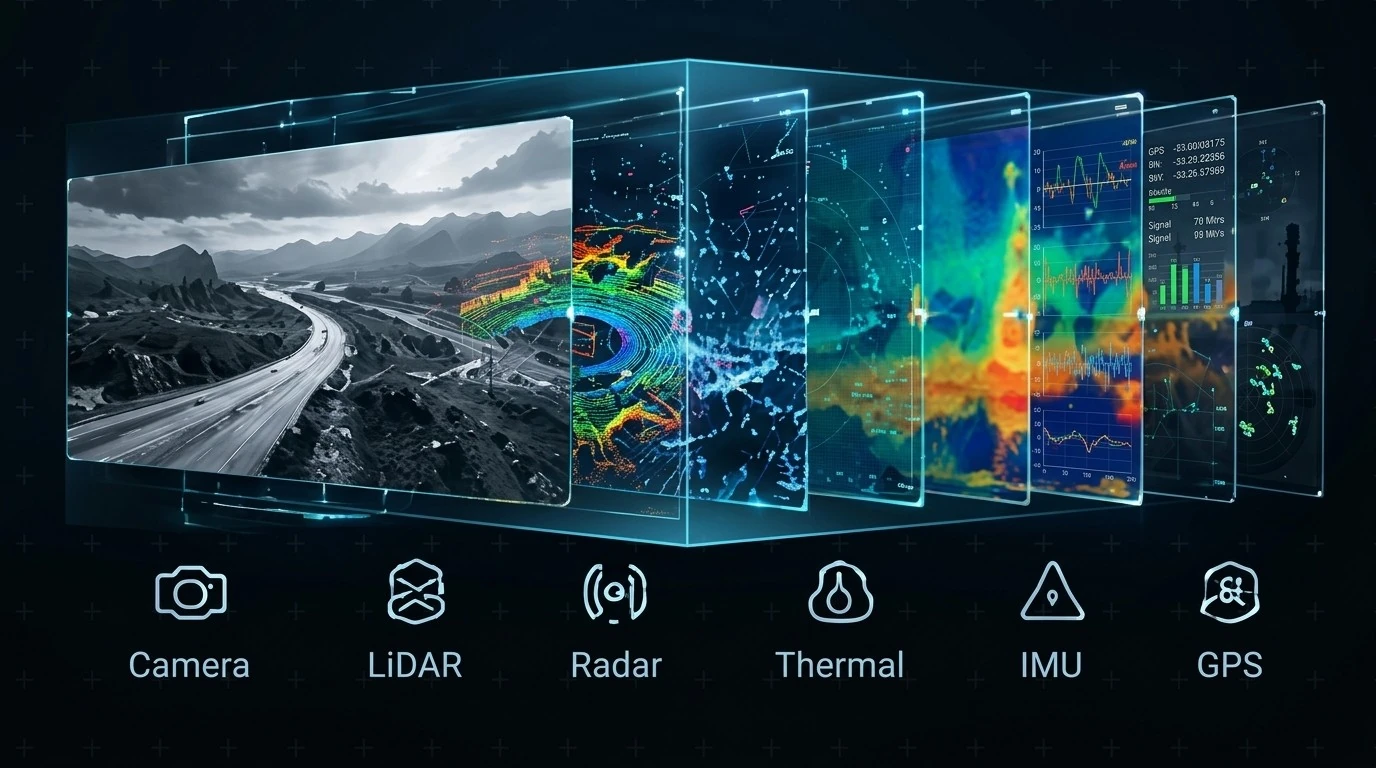
Connect heterogeneous sensors and physical signals into a coherent representation of the environment.
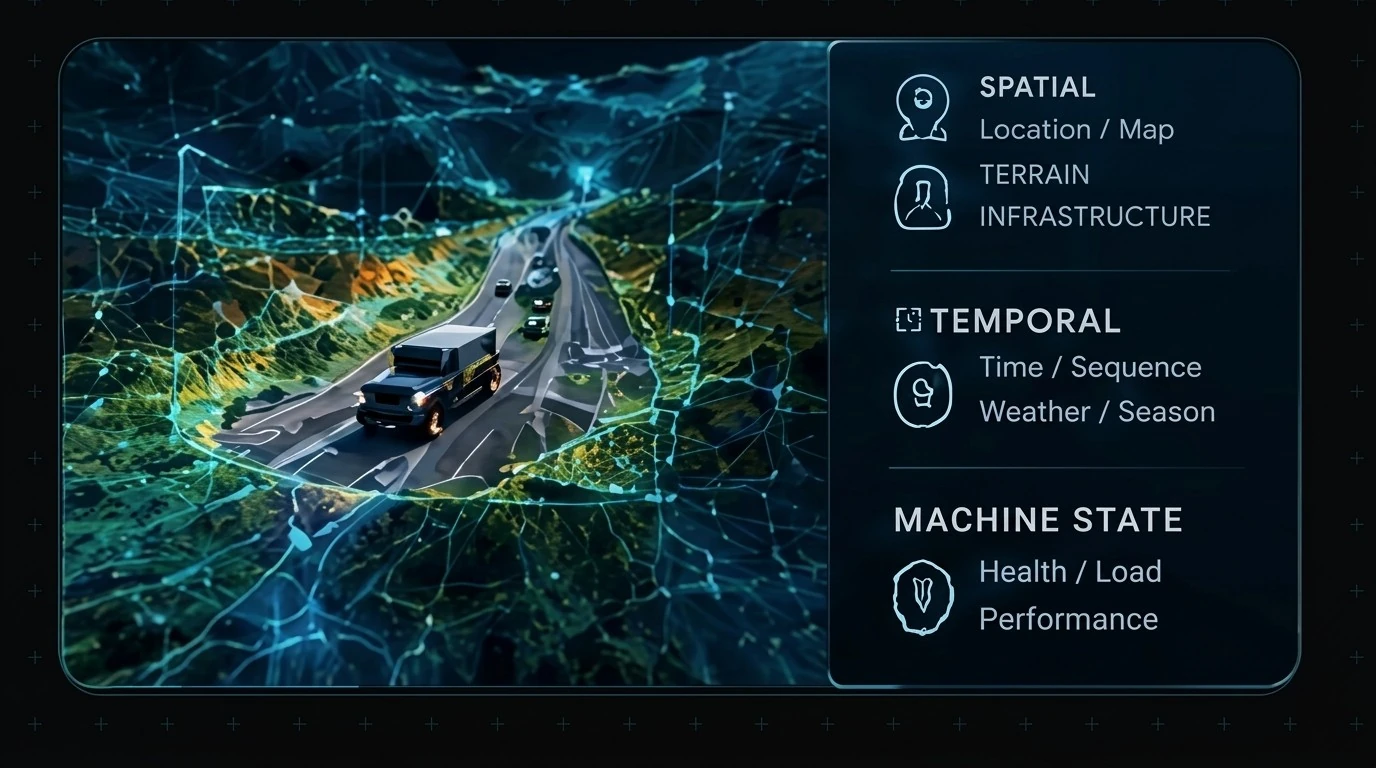
Combine spatial, temporal and machine-state information to understand what is happening around a system.
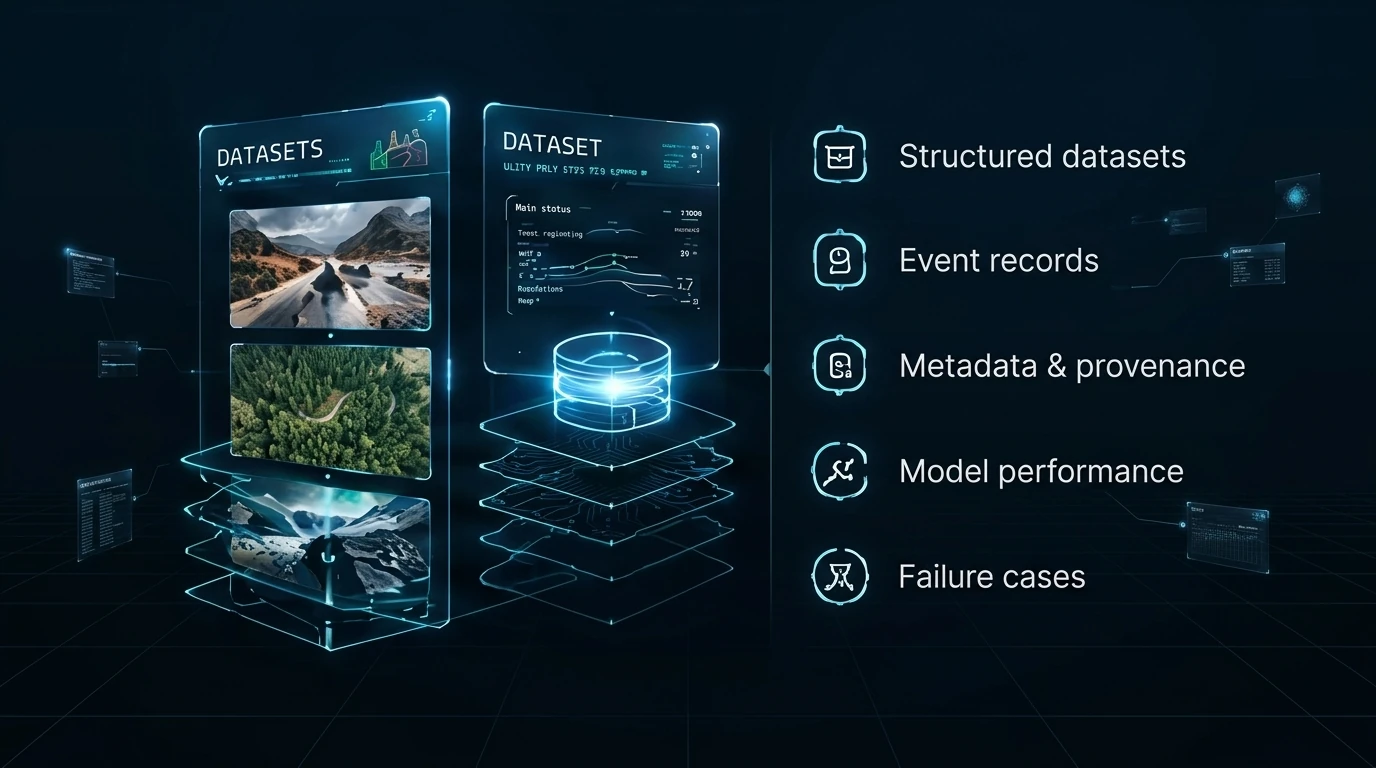
Transform raw observations into structured datasets and operational records that can support evaluation and improvement.
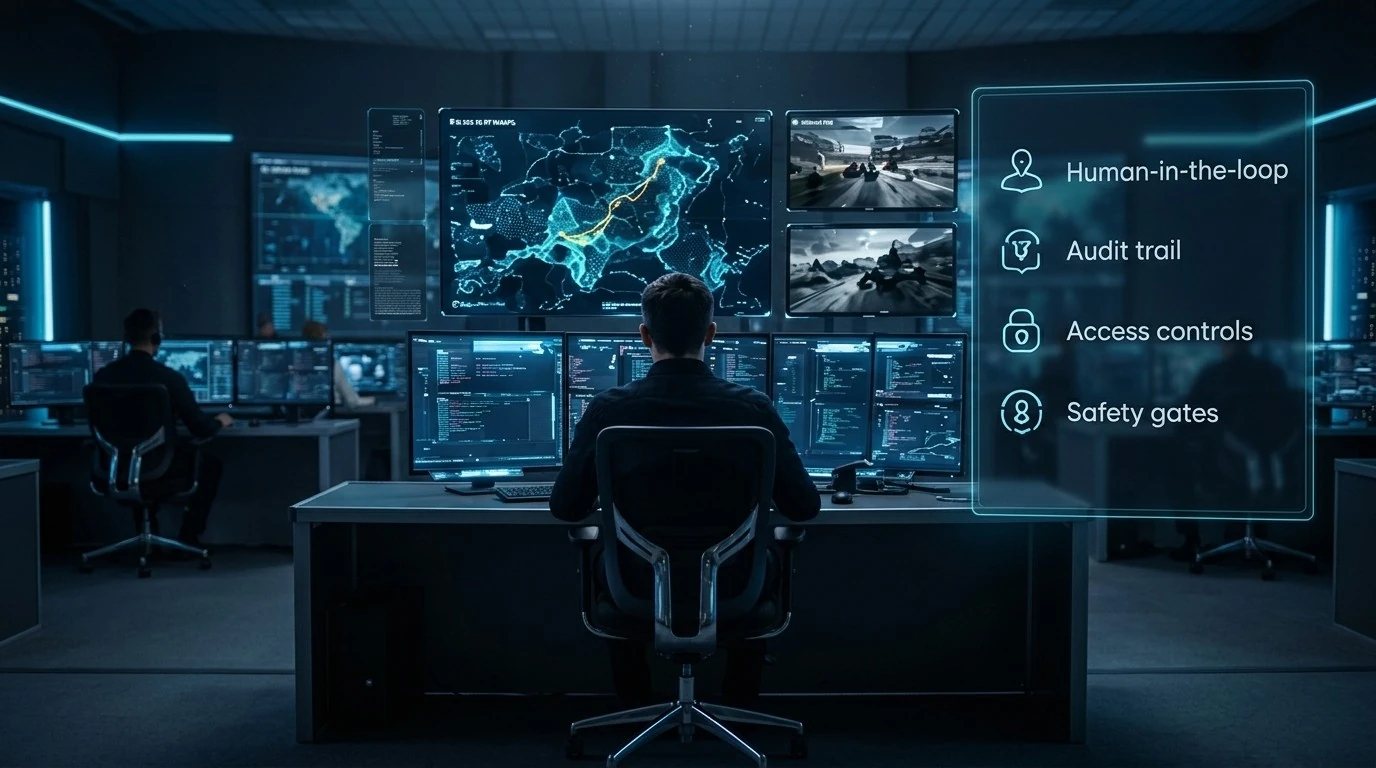
Introduce human review, traceability and operational controls between autonomous systems and consequential real-world actions.
Geospatial targeting that knows where edge cases matter most.
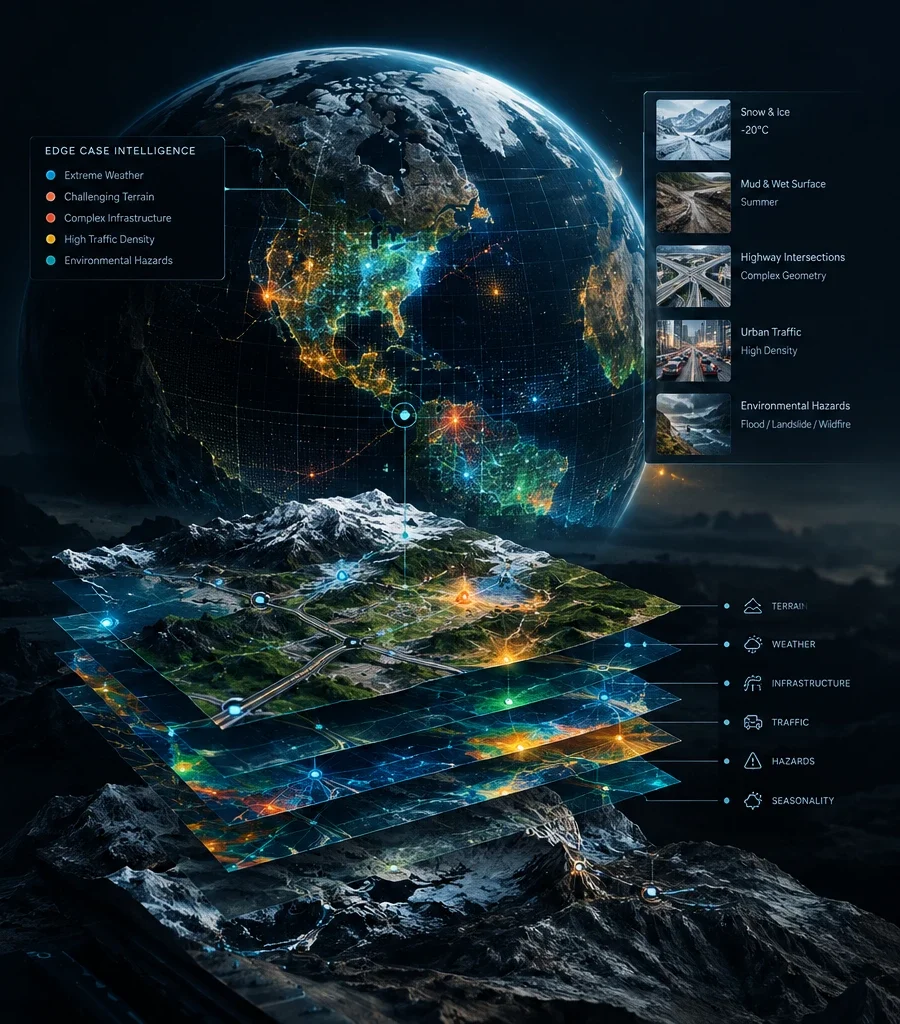
Your model has never seen mud in summer. It has not handled the intersection geometry of this highway. It has not operated in -20°C. You have a global deployment space but a finite collection budget.
Guessing which environments matter is expensive. Sampling everywhere is impossible.
Andromeda is Neicrone's geospatial engine, designed to identify which physical environments matter for your deployment: which geographies carry unseen edge cases, and which terrains, weather patterns, traffic conditions, and hazard classes should lead your collection strategy.
Andromeda selects the ground.
Substrate instruments it.
Request enters at the edge, resolves through server components, and terminates in a tiered store. No hidden hops.

Server Components stream the document shell; client islands hydrate only where interaction exists.
Depth fog, reticle field, and grain composited on the GPU. No WebGL context, no runtime shader compile, nothing to fall back from.
Typed mutations validated at the boundary. Partner intake, telemetry queries, and sandbox scheduling share one schema surface.
Relational source of truth: partners, fleets, runs, clearance gates. Row-level security scoped per organisation.
Hot window for live fleet state and sandbox occupancy. Written by the edge ingest workers, read by dashboards.
Raw sensor episodes, point clouds, and video. Content-addressed, immutable, lifecycle-tiered.
Substrate is being built so that sensor readings, operator decisions, and model outputs carry a verifiable record from capture to deployment.
Sensor Origin
Sensor readings are designed to be timestamped, located, and signed as they are ingested, so later changes can be detected.
Operator Intent
Human decisions are recorded alongside who made them, when, and why, including the reason for any override.
System State
Model outputs and confidence scores are written to an append-only log, so a run can be traced back to the inputs behind it.
Compliance Path
Evidence is structured to support safety assessment work such as ISO 26262 and IEC 61508. It supports a certification case; it is not a certification.
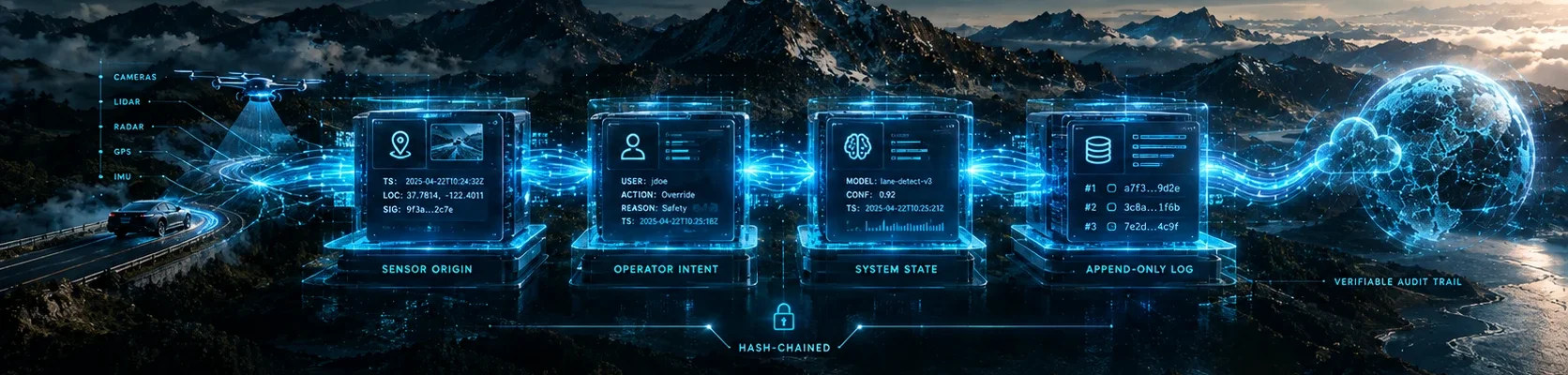
Each record is designed to reference a hash of the one before it, so an edit after the fact breaks the chain and shows up on verification.
Sensor data, operator input, and model output are logged separately, so one record can be checked against the others.
The record is built as events happen rather than reconstructed afterwards, so reviewers see what the system actually saw.
Request access to Neicrone Substrate. We assess your deployment context, validate your edge cases, and instrument your fleets.
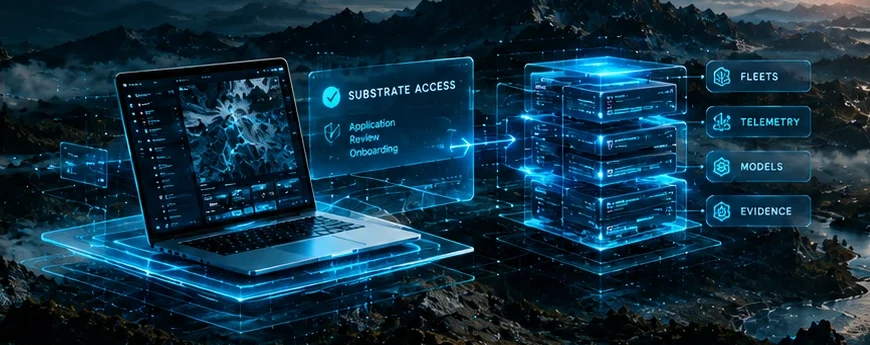
Controlled onboarding with security review and compliance alignment.
We assess your environment, edge cases, and technical requirements.
Telemetry, observability, and auditability designed in from the first engagement.
From request to access through a defined, transparent review process.